Buying your first place in Lake Forest can feel exciting and overwhelming at the same time. You may be wondering whether a condo or townhome is the better fit, how HOA dues affect your budget, and what details matter most before you make an offer. The good news is that with the right information, you can shop with more confidence and avoid costly surprises. Let’s dive in.
Why Lake Forest Appeals to First-Time Buyers
Lake Forest offers a wide mix of housing options, from apartment communities and luxury condominiums to single-family homes, along with access to parks and trails, according to the City of Lake Forest housing overview. For many first-time buyers, that range makes attached homes a practical way to enter the market while staying in South Orange County.
Current market activity also shows real choices for buyers. Recent data shows 54 condos for sale in Lake Forest at a median listing price of about $605,000 and 11 townhouses at a median listing price of about $799,000. Condos are averaging around 40 days on market, while townhouses are averaging about 30 days, which gives you a helpful snapshot of pace and competition.
Know the Difference First
Townhome vs condo in California
One of the biggest first-time buyer mistakes is assuming a townhome is automatically different from a condo in every legal and financial way. In California, a “townhome” is often an architectural style, not a legal ownership type, according to the California Department of Real Estate subdivision guide.
That means two homes that look very similar from the outside can come with different ownership structures. One may be legally a condominium, while another may be part of a planned development. This matters because ownership structure can affect maintenance responsibility, HOA scope, disclosures, and even financing.
Why legal structure matters to you
If you are buying your first condo or townhome in Lake Forest, do not rely on the listing label alone. Ask whether the home is legally a condominium or a planned development, because that answer can shape what you own, what the HOA maintains, and what your lender will review.
HOAs are required in common-interest developments, and membership transfers automatically with the property, as noted in the DRE guide. That means HOA dues, rules, and possible assessments become part of your monthly ownership picture from day one.
What Lake Forest Attached Homes Look Like
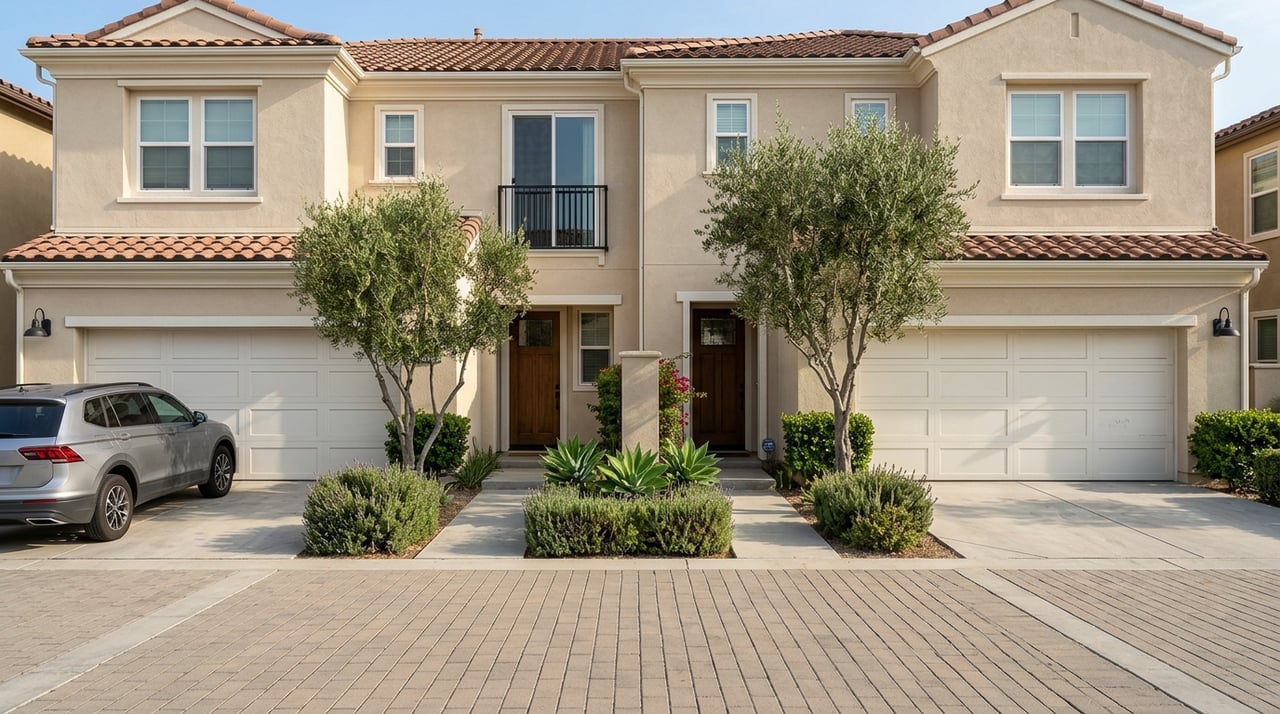
Lake Forest listings show a broad range of attached-home options. Current examples include starter one-bedroom condos around 610 to 625 square feet, two-bedroom condos and townhomes around 950 to 1,450 square feet, and larger attached homes with three to four bedrooms and more than 1,900 square feet, based on current local listing data.
Amenities and layouts can vary just as much as price. You may find pool and spa communities, homes with water, trash, and exterior maintenance included, or townhome-style layouts with two-car garages, lofts, or flexible bonus spaces. This is why the best choice often comes down to your day-to-day lifestyle, not just square footage.
Budget Beyond the List Price
Monthly cost matters more
When you compare homes, focus on your full monthly carrying cost rather than just the purchase price. The DRE homebuyer guidance specifically advises buyers to pay close attention to HOA dues, assessments, and taxes because they directly affect affordability.
In Lake Forest, sample HOA dues in current listings run from the low $300s to about $650 per month, depending on the community and what is included. Some communities offer a lighter amenity package, while others may cover items such as water, trash, exterior maintenance, or shared recreation features.
Do not forget closing costs
Your down payment is only part of the upfront cash needed. The Consumer Financial Protection Bureau says closing costs typically range from 2% to 5% of the purchase price, depending on factors like home price, loan type, lender costs, and location.
If you are building your first-home budget, plan for more than the list price and more than the down payment. That bigger picture can help you avoid stretching too far on the mortgage and leave room for HOA dues, insurance, taxes, and move-in expenses.
Understand taxes and extra charges
Property taxes are an ongoing cost, but they may not be the only tax-related bill you see after closing. Orange County notes that a supplemental property tax bill can result from a recent purchase or new construction, and it is separate from the regular secured property tax bill.
Lake Forest also notes that the city is not currently a local sponsoring agency for residential Mello-Roos taxes and no new CFDs have been formed to date, though buyers should still verify parcel-specific charges in newer neighborhoods through the city’s Mello-Roos information page. In short, always confirm the exact costs tied to the specific property you want.
First-Time Financing Options to Ask About
Low-down-payment financing may be available if you qualify. Fannie Mae’s HomeReady program can go as low as 3% down, and FHA loans can go as low as 3.5% down for eligible borrowers.
If you are buying an attached home, ask early whether the community is eligible for the type of financing you plan to use. Fannie Mae and HUD condo guidance warns that project issues such as deferred maintenance, insurance concerns, litigation, or short-term-rental characteristics can affect financing.
Qualified first-time buyers may also want to review local assistance options. Orange County’s Mortgage Assistance Program offers deferred down payment assistance for qualified low-income first-time buyers, with a 1% minimum down payment, up to $80,000 in assistance, owner-occupancy requirements, and a homebuyer education course.
Review the HOA Before You Commit
Key documents to request
For condo and townhome purchases, the HOA review is one of the most important parts of your due diligence. Under California Civil Code 4525, sellers must provide key association documents, including governing documents, the most recent budget report, current regular and special assessments, unpaid charges, unresolved violation notices, and certain defect or inspection documents.
Buyers can also request board minutes from the prior 12 months. Those minutes can help you spot recurring maintenance issues, policy changes, or discussion of future expenses.
What to look for in the package
For first-time buyers, some of the most useful items are the CC&Rs, the budget, the reserve funding disclosure summary, the assessments history, rental restrictions, and any recent inspection report, according to the DRE’s homebuyer information. California law also requires annual budget reporting and reserve disclosures through Civil Code 5300 and related reserve requirements.
As you review those documents, focus on a few practical questions:
- What do the HOA dues cover?
- Are there any current or planned special assessments?
- How strong are the reserves?
- Are there rental or leasing restrictions?
- Are there unresolved maintenance issues or violations?
A well-run HOA is not about having the lowest dues. It is about whether the association appears to be budgeting responsibly for the property it maintains.
Insurance Questions First-Time Buyers Should Ask
Insurance can be confusing with attached homes because coverage is usually split between the HOA and the unit owner. The California Department of Insurance explains that condo unit-owner policies generally cover personal property, loss of use, personal liability, medical payments, and interior improvements, while the HOA typically covers the building structure and common areas.
Before you close, ask to review the HOA master policy and understand the deductibles. You should also ask whether loss-assessment coverage is needed and whether earthquake coverage is included or available. Those details can make a real difference in both protection and monthly cost.
How to Compare Lake Forest Communities Wisely
Look at value, not just price
A lower-priced condo is not always the lower-cost option over time. One community may have lower HOA dues but fewer included services, while another may charge more and cover water, trash, exterior maintenance, or larger amenity packages, as seen in current Lake Forest listing examples.
Try comparing communities side by side based on the features that affect your real ownership experience:
- Total monthly payment
- HOA coverage and amenities
- Parking and garage setup
- Layout and flexibility of space
- Reserve strength and assessment risk
- Insurance responsibilities
- Financing eligibility
Check maintenance history too
Maintenance history can reveal a lot about how a community is being managed. For example, one Lake Forest listing highlighted recent HOA work including a newer roof, exterior paint, termite and wood repairs, and repiped plumbing, according to this Lake Forest property example.
That type of information does not guarantee future performance, but it can help you understand whether the association appears proactive about upkeep. It may also help you gauge the likelihood of future repair needs or special assessments.
A Smart First-Home Strategy
If you are buying your first condo or townhome in Lake Forest, your best strategy is to stay focused on the details that truly affect ownership. That means understanding the legal structure, confirming financing eligibility early, reviewing the HOA package carefully, and comparing monthly costs across communities instead of chasing the lowest list price.
With thoughtful guidance, your first purchase can be both practical and exciting. If you want help comparing Lake Forest communities, reviewing attached-home options, or planning your next move in South Orange County, connect with The Bowen Team.
FAQs
What is the difference between a condo and a townhome in Lake Forest?
- In California, a townhome is often an architectural style, while the legal ownership may still be a condominium or a planned development, so you should confirm the actual ownership structure before buying.
What do HOA dues usually cover in a Lake Forest condo or townhome community?
- Coverage varies by community, but dues may include items such as common-area maintenance, exterior maintenance, water, trash, or shared amenities like a pool or spa.
What HOA documents should first-time buyers review before buying in Lake Forest?
- Focus on the CC&Rs, budget report, reserve summary, assessment history, rental restrictions, board minutes, and any recent inspection or defect-related documents.
Can you buy a Lake Forest condo with a low down payment?
- Possibly, since eligible buyers may qualify for options such as HomeReady at 3% down or FHA financing at 3.5% down, but the community may also need to meet lender or project-eligibility standards.
Are there special tax costs to check when buying an attached home in Lake Forest?
- Yes, you should budget for regular property taxes and ask whether a supplemental tax bill or any parcel-specific charges apply to the home you are considering.
How should first-time buyers compare Lake Forest condo and townhome communities?
- Compare total monthly cost, HOA coverage, maintenance history, reserve health, insurance responsibilities, parking, layout, and financing eligibility rather than relying on list price alone.